


Gathered at historic Harriet Chapel in Thurmont, Maryland DNR Sec Josh Kurtz (center), Maryland Park Service Director Angela Crenshaw (center right), and Catoctin Furnace Historical Society President Elizabeth Comer (center-left) pose with descendants of the former enslaved workers of the Catoctin Furnace. Photo by AJ Metcalf, Maryland DNR
The Maryland Department of Natural Resources has accepted the donation of land including a historic African American cemetery that is the final resting place of enslaved, skilled workers at the historic Catoctin Furnace in Frederick County.
The Maryland Park Service takes stewardship of this two-acre site as part of Cunningham Falls State Park.
As part of commemorating Black History Month, the Park Service hosted a solemn event Feb. 28 at historic Harriet Chapel – a church that was never segregated – to acknowledge the land donation from Catoctin Furnace Historical Society and remember the enslaved individuals buried there. Descendants of the interred were among the guests.
“The transfer of this land to the Maryland Park Service is more than a procedural step; it is a declaration,” said Maryland DNR Secretary Josh Kurtz. “It is a promise that the State of Maryland will protect this ground with dignity and ensure that these stories are celebrated and shared with honesty. As we finish celebrating Black History Month and turn toward celebrations of America’s 250th Anniversary, this important place will serve forever as a reminder that African American heritage is foundational to Maryland and American history.”
Catoctin Furnace was founded in 1776 by Thomas Johnson and three of his brothers. Johnson was a signer of the Declaration of Independence who served as Maryland’s first elected governor. The Furnace produced iron for George Washington’s army, including cannonballs fired in the Revolutionary War’s final battle at Yorktown, Va. It also produced household items that helped bring comforts to Colonial America including plates and wood-burning stoves. The remains of the furnace are already housed within Cunningham Falls State Park, and the inclusion of the workers’ cemetery will enable Maryland Park Service to tell the site’s complete story.
“We gather to honor the individuals whose lives shaped Catoctin Furnace – skilled ironworkers, laborers, mothers, fathers, and children; people whose contributions to Maryland were immense, even when history failed to record their names,” said Maryland Park Service Director Angela Crenshaw. “Their lives mattered. Their dignity endures. And their story deserves to be told honestly, fully, and permanently.”
Crenshaw acknowledged Catoctin Furnace Historical Society, which helped uncover, document, and preserve the cemetery’s history during their stewardship of the property. Historian and archaeologist Elizabeth Comer, President of the Catoctin Furnace Historical Society, discussed a 1979 excavation of the site that discovered 35 graves, an estimated one-third of the total graves within the cemetery.
The Historical Society also operates the Museum of the Ironworker, which is near the cemetery.
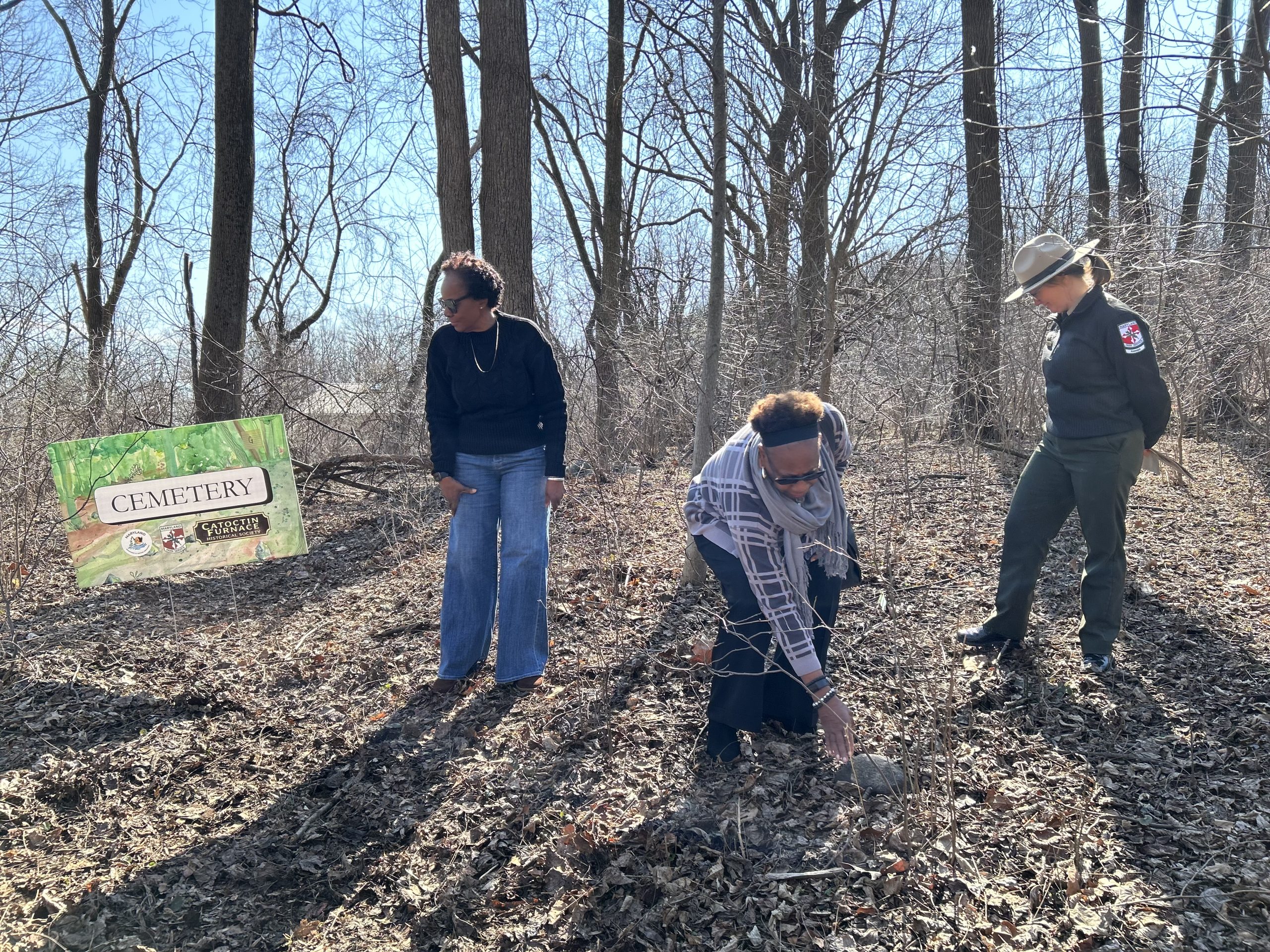
Descendants of enslaved workers at Catoctin Furnace visit the site of the historic cemetery where many are interred. Photo by Winn Brewer, Maryland Department of Natural Resources
In 2014, Catoctin Furnace Historical Society launched an ambitious project to increase public awareness of the role of African Americans in the iron industry at Catoctin Furnace and elsewhere and to highlight the impact of African Americans on the industrial history of the United States.
In May 2025, following a seven-year fundraising effort, the Historical Society was able to acquire the privately owned cemetery located within a 1.921-acre parcel, which it has now deeded to the Park Service.
“How fitting is it that on this, the 250th anniversary of the founding of the United States, we can fully commemorate the lives of these founders of Maryland who lived, worked, and died at Catoctin,” Comer said.
The Historical Society will continue its close association and support of the site. The associated nonprofit Catoctin Furnace Friends Group Inc. is currently seeking funds on behalf of DNR and the Historical Society to develop a conservation and preservation management plan and conduct a ground-penetrating radar survey for a planned trail extension to the site.
