

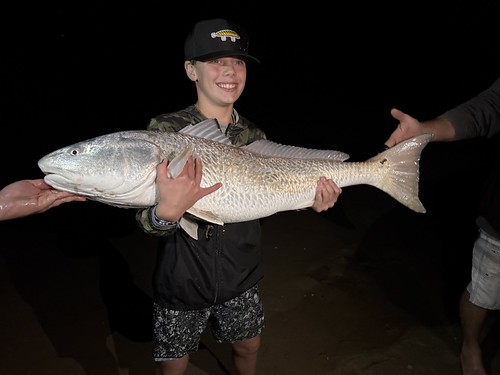
Nathan Anders was fishing at Assateague Island when he caught and released this large red drum, which put a big smile on his face. Photo by James Anders
Cool weather has moved into Maryland and many areas from the western mountains to the Eastern Shore saw their first frost earlier this week. Cooling water temperatures have many species of fish active and ready for anglers to pursue them.
The 2026 striped bass young of the year survey results were released this week and although a little better than last year, our striped bass recruitment situation is still a problem. Read more about the juvenile index report on the DNR website.
Forecast Summary: October 21 – October 27
For more detailed and up-to-date fishing conditions in your area of the Bay, be sure to check out Eyes on the Bay’s Click Before You Cast.
Upper Chesapeake Bay

Angler Blake Moss recently caught this large yellow perch. Photo courtesy of Blake Moss
The current water temperature in the upper Bay is about 65 degrees and is forecast to drop the rest of the month. When the water temperature drops below 60 degrees, baitfish in the tidal rivers will begin their exodus out into the Bay. This will set the stage for striped bass to gather at the mouths of the major tidal rivers and steep channel edges to feed on the baitfish being swept along by stiff currents. Young of the year menhaden and bay anchovies will be the primary baitfish being encountered.
Jigging with soft plastic or metal jigs will be a popular way to fish along the channel edges. Depth finders will pave the way to spotting suspended striped bass. Noticing slicks is helpful and every light tackle angler’s dream is to spot diving seagulls which mark where the striped bass have pushed the baitfish to the surface. The mouths of the Chester and Patapsco rivers are good locations to look for this type of action.
Trolling with tandem-rigged bucktails and sassy shads or umbrella rigs behind inline weight to get down to the 30-foot depth where most striped bass are holding is a good way to cover water when the fish are spread out or the action has subsided.
The Conowingo Dam has been on an afternoon/evening power generation schedule this week. Anglers are enjoying catching a mix of blue catfish and striped bass in the dam pool close to the turbine wash. Stout surf fishing gear is needed to reach that far into the dam pool where fish line up for tidbits of gizzard shad coming from the turbines.
Anglers in the region’s tidal rivers are finding that white perch are beginning to move to deeper waters. Casting small jigs on dropper rigs or using grass shrimp or bloodworms on a bottom rig have been good ways to target them. Anglers fishing with small jigs or Beetle-spin type lures are also catching some large yellow perch in the same areas.
Middle Bay

These two anglers had good luck fishing from a rocky shoreline on Kent Island recently. Photo courtesy of Thomas Zurowski
Water temperature decline is the big story in the middle Bay. We’re in for some chilly weather, which will cause water temperatures to drop in the tidal rivers. Bay water temperatures are hovering near 65 degrees and the lower Choptank River at 61 degrees. Unfortunately, it also looks like we might be seeing stiff winds out of the north all week. The colder water temperatures will set the stage for baitfish to depart the tidal rivers and run smack-dab into striped bass waiting along the channels in the Bay and at the mouths of the tidal rivers. This is the scenario that striped bass anglers have been patiently waiting for.
This is a very important time for the striped bass as well, for this gives them the opportunity to build their body stores up for the upcoming winter months. It is time to get back into shape after enduring those warm summer water temperatures. Juvenile menhaden will be the main course, but bay anchovies and silversides will be on the menu.
Soft plastic and metal jigs in the 3/8-ounce to 3/4-ounce size range will be the lures of choice, depending on depth, wind, and current. Placing a plastic skirt on plastic jigs is often a good idea to increase profile. A fast taper fishing rod and a reel spooled with braid is a real asset in reducing line drag in the current and effectiveness in jigging.
Shore based anglers are experiencing good fishing for striped bass this week from promising looking shorelines. Rocks offer good structure for striped bass and places like the Kent Narrows offer good places to fish.
Trolling will become more of an option for anglers as the month of October progresses and most will be pulling umbrella rigs. When fishing from a charter boat, this is often standard fare. There are times when a cozy cabin out of the wind and cold can be an inviting way to fish. Heavy tackle to reel in the inline weight, umbrella rig and perhaps a fish will be needed to complete the task.
As water temperature drops this week, white perch may start to head for deeper and warmer waters. Once they start this move, deep structure will be a key to finding them. Deep-water piers should hold them a while longer until they head for oyster reefs in the lower sections of the region’s tidal rivers. Kent Narrows is worth mentioning as a good place to target white perch this week. Dropper rigs with small jigs or bottom rigs baited with grass shrimp, peeler crab, or bloodworms are a popular way to fish for them in deeper waters.
Lower Bay

A happy angler holds up a striped bass from the lower Patuxent caught while jigging. Photo by Travis Long
Anglers in the lower Bay will be at the wrong end of the stiff northerly winds predicted for this week but the sheltered waters in the lower Potomac, Patuxent, and Tangier Sound may offer some protection. The cold weather that has moved in and is predicted to continue for the remainder of the month will do much to lower water temperatures in the lower bay region. This drop in water temperature will drive the spot, bluefish, and red drum south to warmer waters.
Anglers may still be able to find a few spot for live-lining striped bass but time is short. Many striped bass anglers are experiencing good luck casting a mix of lures in the shallower waters of the bay, the lower Potomac River, the lower Patuxent River, and the shorelines of the Eastern Shore and Tangier Sound. Topwater lures and paddletails are popular lure choices during the early morning and late evening hours.
Jigging with soft plastic or metal jigs is quickly becoming the most popular way to fish for striped bass along channel edges. If you’re lucky enough to encounter breaking fish, casting into the surface action or jigging underneath it is perhaps the most exciting fishing action anyone can experience. The sight of diving seagulls is enough to get anyone’s heart to skip a beat. Now that the bluefish are gone, gulls resting on the water can offer evidence that some kind of surface action occurred recently. Slicks are another clue and a good depth finder will settle all questions.
The lower Potomac River from the Route 301 bridge south to Point Lookout has been providing good striped bass fishing this week. Some of the striped bass are measuring short of the 19-inch minimum, but there seems to be plenty of fish falling within the slot. The lower Patuxent River below the Route 4 Bridge has been producing good striped bass fishing, The mouth of the Nanticoke and the cuts through Hoopers Island are also excellent places to jig.
Trolling is becoming more popular along some of the steeper channel edges in the lower Potomac River, Patuxent River and the steep channels out in the Bay. At this time most striped bass can be found at 30-foot depths suspended off the bottom. It will take heavy inline weights to get umbrella rigs down to where the striped bass are holding.
White perch will begin to move from the shallower waters and hold over oyster bars and structure in the lower sections of the tidal rivers. Bridge piers in the lower Potomac and Patuxent should not be overlooked when using dropper rigs using small soft plastic jigs of bait.
Freshwater Fishing
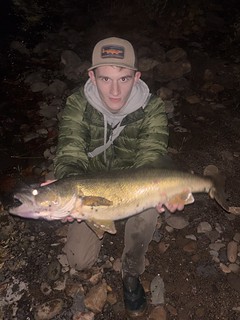
Ryan Chaney holds up a huge walleye he caught recently in the upper Potomac. Photo courtesy of Ryan Chaney
The fall put-and-take trout stocking program continues this week and hopefully one of those stockings will be at your favorite fishing location. In most freshwater creeks and rivers, the water temperatures are in the mid-50s this week. The put and take areas will offer anglers the option of taking some trout home.
The delayed harvest areas, which are catch-and-release only, will provide plenty of fun trout fishing through fall, winter, and spring. These trout management areas hold good water quality for trout until summer and offer the option to keep trout that are stressed during the summer heat The Group 1 delayed harvest areas are catch-and-release only from October 1 through May 31. June 1 through September 30 up to five trout per day can be retained. The Group 2 delayed harvest areas are catch-and-release only from October 1 through June 15. After that, five trout per day can be retained from June 16 through September 30.
Another trout management area are the catch-and-return fly-fishing-only areas. The Patuxent catch-and-return fly-fishing area was stocked with brown trout earlier this week and offers a little more challenge for fly rod anglers. To learn more about our delayed-harvest, catch-and-return, and put-and-take trout stockings, designations and maps, check the DNR trout stocking website.
The upper Potomac waters are running clear and cool this week and offering good fishing for smallmouth bass and walleye. Grass beds are starting to show signs of decline and will soon be breaking up. This will start an exodus of crayfish, which is a smallmouth bass’s favorite food. They will be positioning themselves to intercept the crayfish as they head for deep water cover. Small crankbaits and jigs that resemble crayfish are excellent lures to use this month. Tubes, spinnerbaits, and jerkbaits can be good lures to imitate baitfish also headed for deeper cover. Falling leaves and broken grass will be a pesky part of fishing for the next month but all part of the game.
Cooler water temperatures will offer fishing for a variety of species to last longer through the daylight hours. Largemouth bass will be moving more freely throughout the water column and aggressively feeding to build up their body stores for the upcoming winter months. October offers some of the best fishing opportunities for landlocked striped bass in Liberty, Triadelphia, and Piney Run reservoirs.
Chesapeake Channa (snakeheads) are starting to feel the chill and sun-soaked shallow water areas during the afternoon are a good place to fish for them. Paddletails are always a good choice, and many anglers will start to fish with large minnows under a bobber in the more open waters. As grass declines, sunken wood can be good locations to target.
Atlantic Ocean and Coastal Bays

Ronald Marquez caught and released this large red drum in the wind tossed surf at Assateague recently. Photo courtesy of Ronald Marquez
The Ocean City area had to weather another rough weekend, and northeast winds are predicted this week. Surf anglers who are braving the wind and chill are catching and releasing large red drum in the surf on fresh cut bait. As usual, inshore sharks and cownose rays can be pesky. Anglers fishing with smaller baits are catching some kingfish and spot.
Inside the inlet fishing for tautog is getting better every day as water temperatures cool. The jetty rocks, bulkheads and bridge piers are all good places to fish for tautog. Live sand fleas, pieces of green crab, or any other type of crab are good baits. The sheepshead seem to have left. Fishing for striped bass during the evening hours is good for those drifting cut bait in the current. Some anglers are having good luck casting soft plastic jigs near jetty rocks.
The back bay waters are cloudy from the recent windy conditions and are not likely to improve this week due to the windy forecast. The channels close to the inlet, the East Channel, and the inlet are good places to fish for flounder, especially on a flood tide. Larger baits of spot, mullet or menhaden will attract the attention of the larger flounder.
Fishing for black sea bass is reported to be fair this week, anglers are catching fish, but they’re not seeing limit catches this week. As waters cool further in November and December, black sea bass catches and the size will improve. Flounder fishing at the inshore lumps is not good, most anglers report cloudy water conditions.
Farther offshore the focus at the canyons has been on swordfish. It has been a long time since Ocean City based anglers have seen swordfish numbers like this. Deep drop fishing for blueline and golden tilefish is good, and anglers are finding some small dolphin near floating structure and the lobster pot buoys.
“The years will bring their Anodyne, but I shall never quite forget the fish that I had counted mine and lost before they reached the net.” – Colin Ellis, 1963
Maryland Fishing Report is written and compiled by Keith Lockwood, fisheries biologist with the Maryland Department of Natural Resources.
The Forecast Summary is written by Tidewater Ecosystem Assessment Director Tom Parham.
A reminder to all Maryland anglers, please participate in DNR’s Volunteer Angler Surveys.
